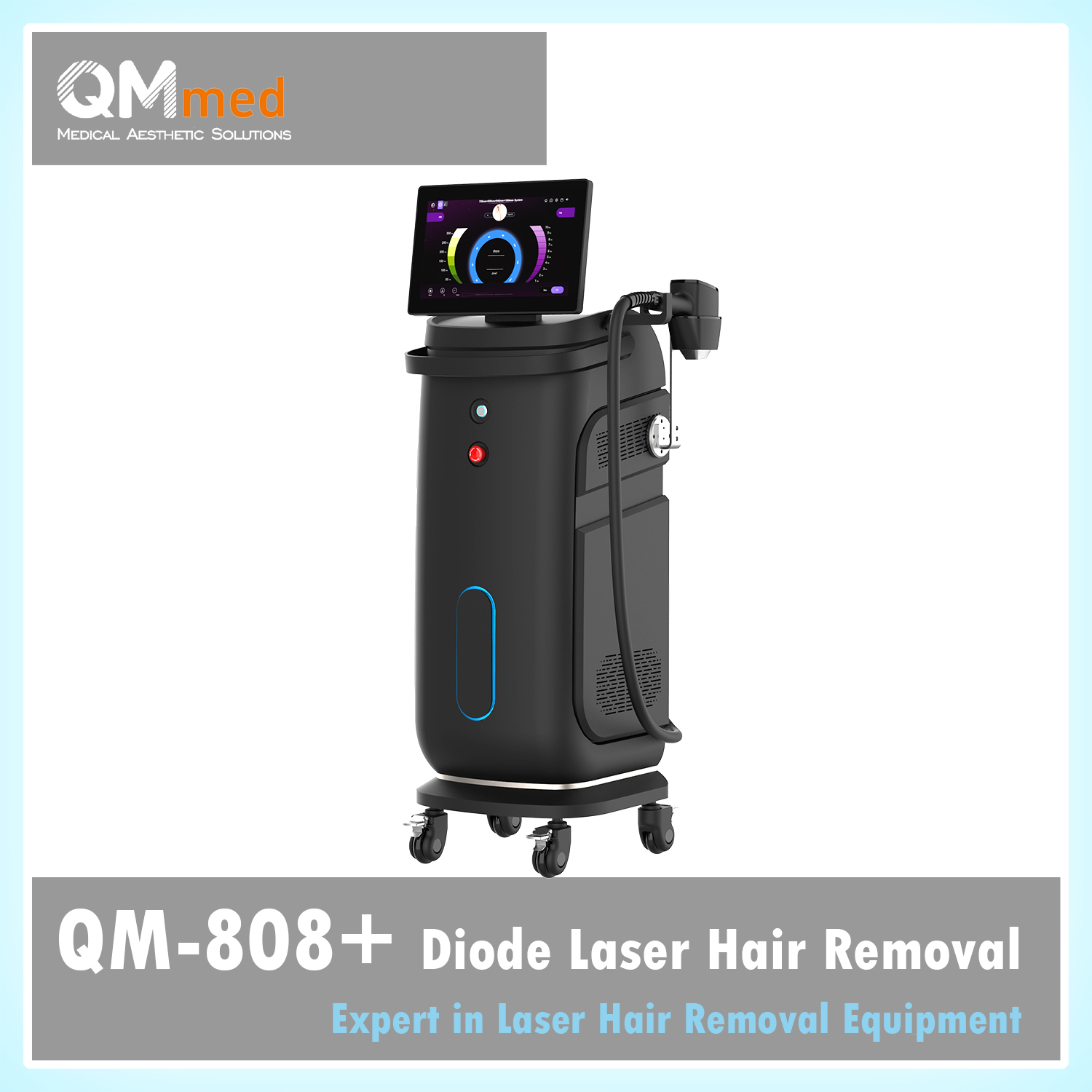



808nm Semiconductor Laser Hair Removal Device: Principles, Advantages, and Professional Guide
This article provides a systematic overview of 808nm semiconductor laser hair removal technology. It covers fundamental knowledge about hair, the principles underlying laser hair removal, core equipment technologies, market benefits, and answers to common questions. The goal is to serve as a comprehensive professional reference for both practitioners and potential clients.
I. Hair Basics: Structure and Growth Cycle
To effectively remove hair, it is essential to understand the target of treatment—hair and its follicle.
1. Hair Structure:
- Hair Shaft: The visible portion of hair projecting above the skin surface.
- Hair Root and Follicle: The segment beneath the skin, enveloped by the hair follicle. The expanded lower end of the follicle is termed the hair bulb, at whose base lies the dermal papilla—a structure rich in blood vessels that supply nutrients to the growing hair. Within the hair bulb, the hair matrix is the region responsible for hair production.
- Key Treatment Targets: Both the hair shaft and follicle contain substantial amounts of melanin. This pigment acts as the primary chromophore, absorbing light energy during laser treatment.
2. Hair Growth Cycle: Hair growth is not continuous but proceeds through three distinct phases:
- Anagen (Growth Phase): During this active growth stage, the hair root is thick and deeply pigmented, with maximal melanin content. Hair in anagen is highly susceptible to laser energy, making this the ideal time for treatment. This phase can last from one month to six years, depending on the body area.
- Catagen (Transitional Phase): Growth ceases, the hair papilla begins to regress, and melanin production decreases. This phase lasts approximately three weeks.
- Telogen (Resting/Shedding Phase): The follicle separates from the papilla, and the hair is shed as the follicle prepares to re-enter the growth cycle. This phase lasts roughly two to three months.
- Clinical Significance: As only a fraction of follicles are in anagen at any given time (e.g., ~30% for underarms, ~20% for legs), a single treatment cannot eliminate all hair. Multiple sessions (typically 4-6) are necessary to achieve optimal, long-term reduction.
II. Evolution of Hair Removal Technology and Principles of Laser Hair Removal
1. Technology Comparison:
- Traditional Methods: Techniques like shaving, waxing, and depilatory creams offer temporary results and may cause skin irritation or burns.
- Laser/Intense Light Methods: These include various lasers (694nm ruby, 755nm alexandrite, 1064nm long-pulse Nd:YAG) and IPL (Intense Pulsed Light). Among these, 808/810nm semiconductor diode lasers have emerged as a leading technology, often described as "pressure-type rapid sliding ice-point painless" hair removal.
2. Principle of Laser Hair Removal: The process is based on selective photothermolysis. The 808nm wavelength is preferentially absorbed by melanin in the follicle and shaft. This light energy is converted into thermal energy, heating the hair papilla. The subsequent thermal injury disrupts the papilla's ability to nourish the follicle, leading to its inactivation and resulting in permanent hair reduction or significant, long-term hair loss.
III. Technological Advantages of 808nm Semiconductor Laser
The 808nm diode laser offers several distinct benefits compared to other wavelengths:
1. Wavelength Advantage: The 808nm wavelength is considered a "gold standard" for hair removal. It offers a favorable balance: efficient absorption by melanin combined with sufficient penetration depth to reach the bulb (typically 2-5mm). Crucially, it minimizes absorption by competing chromophores like hemoglobin and water, reducing the risk of thermal damage to surrounding tissue. This enhances safety and makes it suitable for a wide range of skin types (Fitzpatrick I-VI).