

Comparative efficacy of intense pulsed light for different erythema associated with rosacea
Jianjun Liu 1, Junlian Liu, Yingyun Ren, Bin Li, Shichao Lu
Affiliations Expand
Abstract
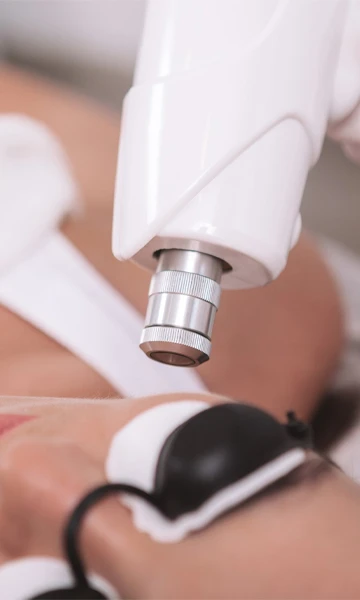
Objective: To compare the efficacy of intense pulsed light (IPL) (540-950 nm) in treating different erythema associated with rosacea.
Methods: Thirty-two patients with erythematotelangiectatic rosacea (ETR) (n = 16) and papulopustular rosacea (PPR, n = 16) were recruited. Three treatments of IPL (540-950 nm) were administered on the face at 3-week intervals. Clinical improvement in erythema was independently assessed by two dermatologists using a quartile grading scale [0, ≤ 25% improvement (poor); 1, 26-50% improvement (fair); 2, 51-75% improvement (good); and 3, 76-100% improvement (excellent)]. Patient satisfaction was evaluated using a 10-point visual analog scale (VAS: 0, lowest; and 10, highest).
Results: Thirty patients were involved in this study. All patients showed improvement in erythema after three sessions of IPL (540-950 nm) treatment. Based on physician's assessment, the overall clinical improvement in PPR group was significantly higher (mean ± SD of PPR group, 2.167 ± 0.748 vs. ETR group, 1.400 ± 0.541; P = 0.003) and patient satisfaction was also higher in PPR group (mean ± SD of PPR group, 6.867 ± 1.457 vs. ETR group, 5.600 ± 1.502; P = 0.026). The proportion of patients showing > 75% clinical improvement among PPR group was also higher than that among ETR group (5/15 and 0/15, respectively; P = 0.021). Side effects were minimal and transient (erythema and/or edema) for patients.
Conclusions: IPL (540-950 nm) is a safe and effective treatment for rosacea-associated erythema, especially for perilesional erythema.
Keywords: erythema; intense pulsed light; rosacea.